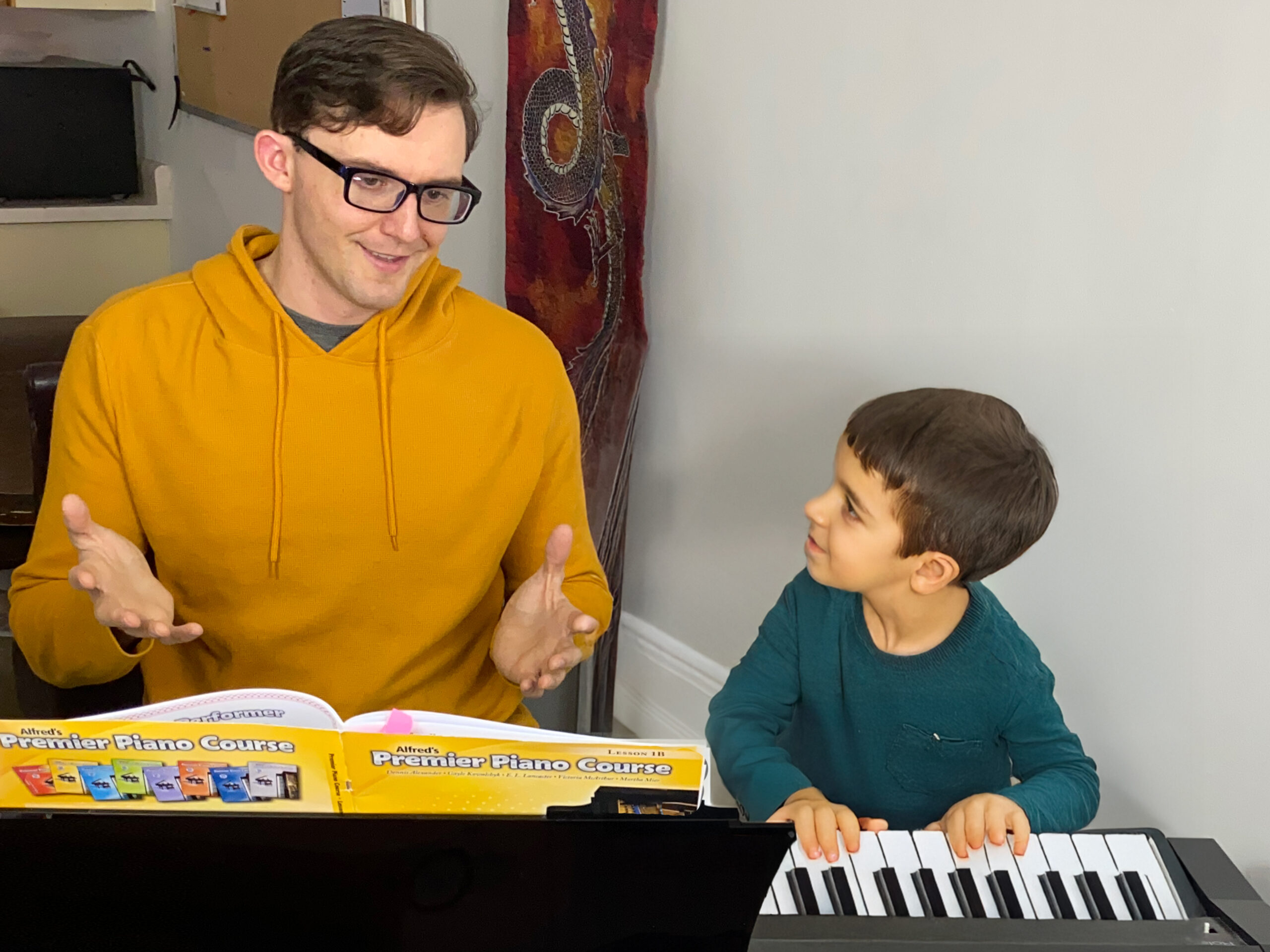
So you’re looking to get your kid piano lessons in Kelowna – awesome, you’re in the perfect area for this. The Okanagan is rife with talented musicians and educators to help facilitate your child’s journey.
But if you’re unsure where to start. Don’t worry, this guide will cover everything from buying pianos in Kelowna to what to look for in teachers, so let’s get into it!
Buying Pianos For Your Kids
The advice I always give to my students parents is go cheap, used, and something like a CASIO (brand) keyboard, with the understanding that if your child takes to the piano and you want them to pursue it further, that you can then invest in a better instrument down the line.
Price wise there’s no sense in spending $300 or more, just to have it sitting and collecting dust if your child decides it’s not for them. Anything between $50-$150 is good.
Also, no need for the piano to be new. A used instrument is perfect. Everyone from Slash to Ray Charles started on used instruments so your kid will be in good company.
As for where to buy this piano? Kijiji and Facebook Marketplace are your friends, just make sure you have the seller test the piano for you to make sure it works. And make sure to test each key on the keyboard to ensure they make a sound. You don’t want to bring it home to find the middle C key doesn’t work.
Quality wise, don’t stress out about the sound too much. I know you want to get the perfect instrument for your kid but the truth is a beginner player is going to sound like a beginner on a million dollar grand piano and on a $50 used Cassio keyboard, whereas the pro is going to sound great on both. So save the million, for a year down the line! Then spend as much as you want.
Now if you are determined to get something nicer, then expect to spend between $200-500.
I recommend checking for things like weighted keys on the piano and making sure it comes with a foot pedal (though a foot pedal won’t be necessary for most children as that’s more for 10 year old’s and up).
You can generally look up the model of a piano and find out if it has weighted keys via a Google search but if you’re unsure, simply test it out by playing a key, if you feel some resistance to it, then chances are it has weighted keys.
For a nicer keyboard/piano setup, this may be time to go to a place like Wentworth Music (on Harvey) to consult with them to see what they have – plus if you buy there you get the warranty.
But you can still buy used, just make sure to double check the value of the model number you are buying and if you are buying an acoustic piano (aka, upright piano) be aware it’ll probably require yearly tuning – which you can get serviced from the wonderful Kelowna piano tuner, Elmore Epp (you can contact him via his Facebook page here) – and again, you have to check each key because in my experience a lot of the keys on these old upright pianos are “sticky” and may not be able to be fixed, which could force your child to play slower.
What to Look For in a Teacher
Proximity is a good starting place, especially when you consider that a lot of lessons are after school and might have you up against rush hour traffic on the bridge. For example, my home studio is near the Capri mall, close to downtown Kelowna. During rush hour this is ideal for someone who is from the downtown area vs someone who is from West Kelowna.
The next thing to consider is the fit with the teacher.
For example, when I was a kid, I took piano lessons from a more serious/strict teacher and it didn’t do much for my enthusiasm towards the instrument – in fact it made me walk away from the piano for years. Looking back, nothing was wrong with the teacher, or me, we just weren’t the right fit for one another.
Think of your kids personality, what they respond to in a person/educator, and then talk to different teachers and see what their approaches and general attitude are.
Also, consider the goals of your child.
Is your child determined to have a life on stage in the bright lights? Or are they here to develop a new skill and gain a new hobby?
These things impact the kind of teaching style/person your child needs. For instance, the kid envisioning the “bright lights” might respond better to a teacher who is demanding because it’ll feel more “professional” to them, where as the kid looking to gain a new hobby would probably be more suited for a friendlier approach.
And honestly, both types of teachers will teach your kids fundamentals, and get them on their playing journey but the experience of how they do so will be much different for your kid.
And keep in mind knowing what your child needs is not only helpful for you, but also for their perspective teacher. For example, the way I teach an ADHD student vs how I teach a student without ADHD is different – there’s lot more jumping around to short focused activities, using colours, etc. But if a teacher doesn’t know this about their student, it can cause the child to struggle initially and potentially lose interest. Communicate the needs of your kid with the teacher and they will have a better chance of getting through to them.
Also, check to see what the first year/semester would look like for your child. I provide each of my students parents with a “guide map” for things were looking to accomplish with their child once I’ve had them for one or two lessons. The list can vary depending on the skillset and how fast the child takes to the piano, but in general, for beginner children (think ages 3-5) I have goals that focus on familiarity vs fluency, like getting them to know the symbols for treble and bass clef, knowing which hands to use for the treble and bass clef, teaching them all the notes on the piano, and so forth. These things may seem small, but for a four year old these concepts can take a fair amount of repetition to sink in, and are fundamental to them having success down the line.
For older students I have goals list like working through a grade 2-3 workbook, learning the major scales in every key, etc…
Pricing and Trial Lessons
Lessons usually run between $30-40 per half hour for a piano lesson, so it’s worthwhile seeing if your potential teacher offers a trial lesson before you make any large commitment.
For instance, I offer a free first lesson and then have options for drop in classes ($35 per half hour lesson) or paying for bulk lesson packages at a discounted rate ($120 for 4 lessons = $30 per half hour lesson).
Books To Buy For Piano Lessons
I’d recommend asking your child’s teacher about what books to pick up once they’ve had a lesson or two. Chances are they’ll have a recommendation. If not, here’s a few books for kids that you could snag.
Ages 7 or Under
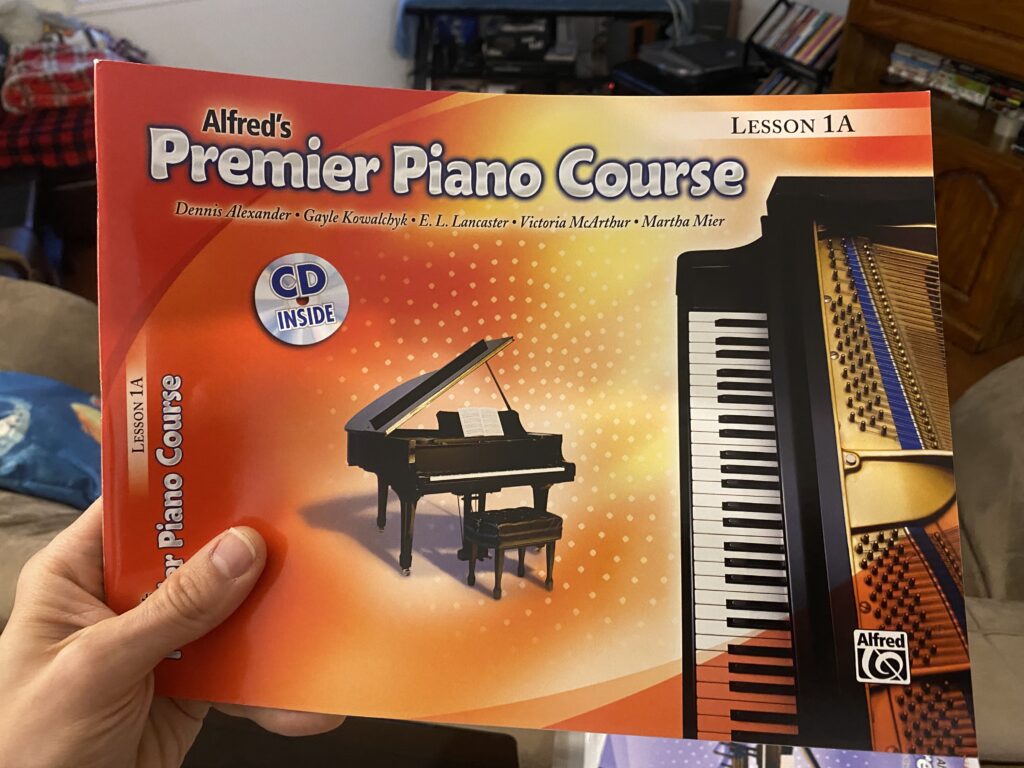
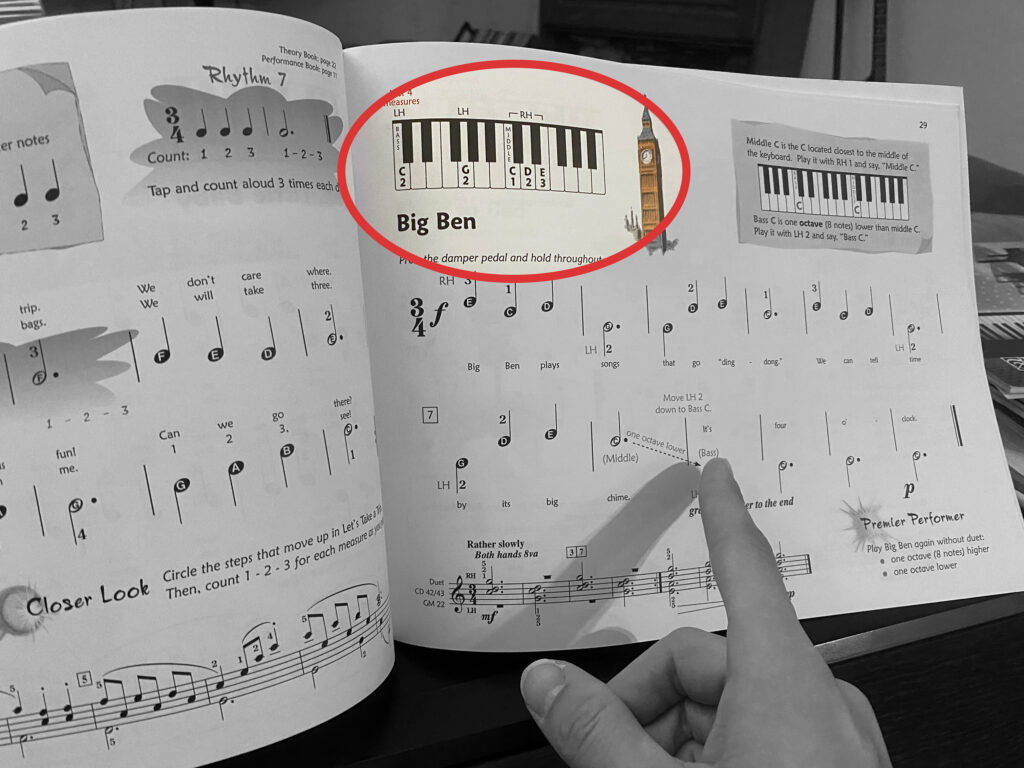
Alfred’s Premier Piano Course Lesson 1A – great book, under $20 and user friendly for parents. For example, look at this page below, it shows you where to place your fingers and that’ll help you teach your kid. Plus, I find my 5-6 year old’s respond to the pictures in the book. Also, most of the songs are user friendly for young children’s hand sizes and finger dexterity.
Ages 7-10
Alfred’s Premiere Piano Course Lesson 1B – still kid friendly with pictures and easy songs, but it’s a tad more challenging and will require some early fundamental ability to read musical notation and symbols. If you do buy this, just do a quick Google inquiry on “sheet music note names” and you can fill out a section at the front of the book with you kid to help them, and yourself, learn/remember the note names.
10 and over
You can go a few ways here. Grabbing the Alfred Premiere Piano Course 1B book will work for anyone, including adults, but is more kid oriented. Rock School books are great for modern material and a level 1 book should be friendly, but just keep in mind, if the book doesn’t include a guide to reading musical notation, then you should print some materials off Google by simply searching “piano note/key names”.
When in doubt, talk to someone at Wentworth Music and they’ll set you on the right path.
Practice
When I first started teaching I quickly realized I needed to teach the parents as much about practice as the children.
Whoever your child’s instructor is get them to spend the last five minutes of a class explaining to you and your child what practice looks like and see if they have resources for you to work with. This doesn’t need to happen every time, just at the beginning, or every once in a while you can inquire to get an idea of what your child should be focusing on.
For practice, I provide my students parents with 60-90 second videos for their kids to play along with so its as simple as the parent loading the video on a tablet or phone, showing it to the kid and the kid follows along on their piano. Once its done the kids can leave and continue their lives running around the house and causing mayhem.
I also provide practice sheets so parents can easily refer to it to see if their child is touching the right keys. Plus it provides a non-screen option for their children.
See if your child’s teacher has any resources for their kid to refer to, you’ll be surprised, a lot of teachers do have videos/recordings to help them out.
As for how many times your kid should practice and for how long they should be, well that will vary for each kid but in general shorter s most effective for kids.
5-10 minutes 2-3 times a week works great. I often recommend doing it first in the morning before school that way they get it done and don’t have to think about it.
Also, try not to label practice as homework. I call it a quest for my student to make it seem active and fun.
In Closing
All of this can feel overwhelming, but the fact that you’re taking the time and effort to enlist your kid in piano and trying to set them up as best as possible is a testament to what a thoughtful good parent you are. Good luck on your journey and if you’re interested in giving your kid a free lesson, you can reach out to me via this site form or by emailing me at alex@upnotesmusic.com. Have a great day!